"Everyone says they want automation that runs itself. Almost nobody builds it that way."

Set It and Forget It - What That Actually Takes to Build
The promise everyone makes
Automation tools love the phrase. "Set it and forget it." It's on landing pages, in YouTube thumbnails, in every sales pitch for every no-code platform. And the promise is real, but the delivery almost never is. Because "set it and forget it" isn't a feature you turn on. It's the result of a hundred small decisions made correctly at the start. Most people skip those decisions. Then they wonder why their workflow needs babysitting at 3AM.
What babysitting actually looks like
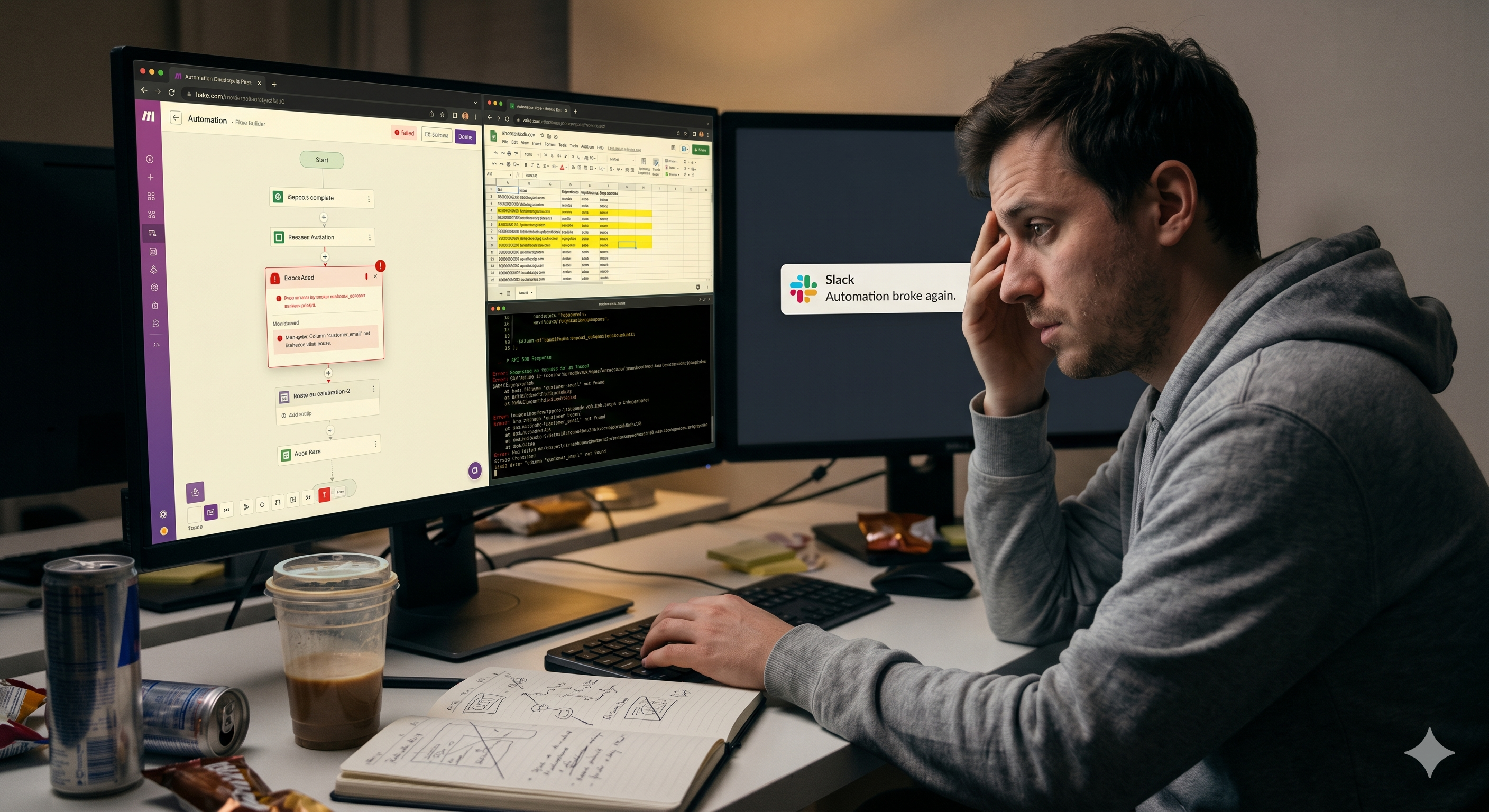
You built the workflow. It works, in perfect conditions. Then one day a form field comes in empty. Or an API returns an unexpected response. Or someone changes a column name in the spreadsheet. And suddenly your beautiful automation is silently failing, or worse, doing the wrong thing loudly. You get a message. You log in. You fix it manually. You tell yourself you'll clean it up later. You don't. That's babysitting. And if you're honest, you probably have at least one workflow like that right now.
The real work happens before the first run
When I build a system, I don't just think about the happy path, the clean, ideal scenario where every input is perfect and every API behaves. I think about what happens when it doesn't. What if the data is missing? What if it runs twice? What if the third-party service is down? A truly forgettable system handles all of that quietly, without my involvement. It logs what happened. It retries when it should. It stops gracefully when it can't continue. It doesn't send half a contract or duplicate a record just because something was slightly off. That's not magic, that's just careful logic built upfront.
Idempotency, the word most builders never learn

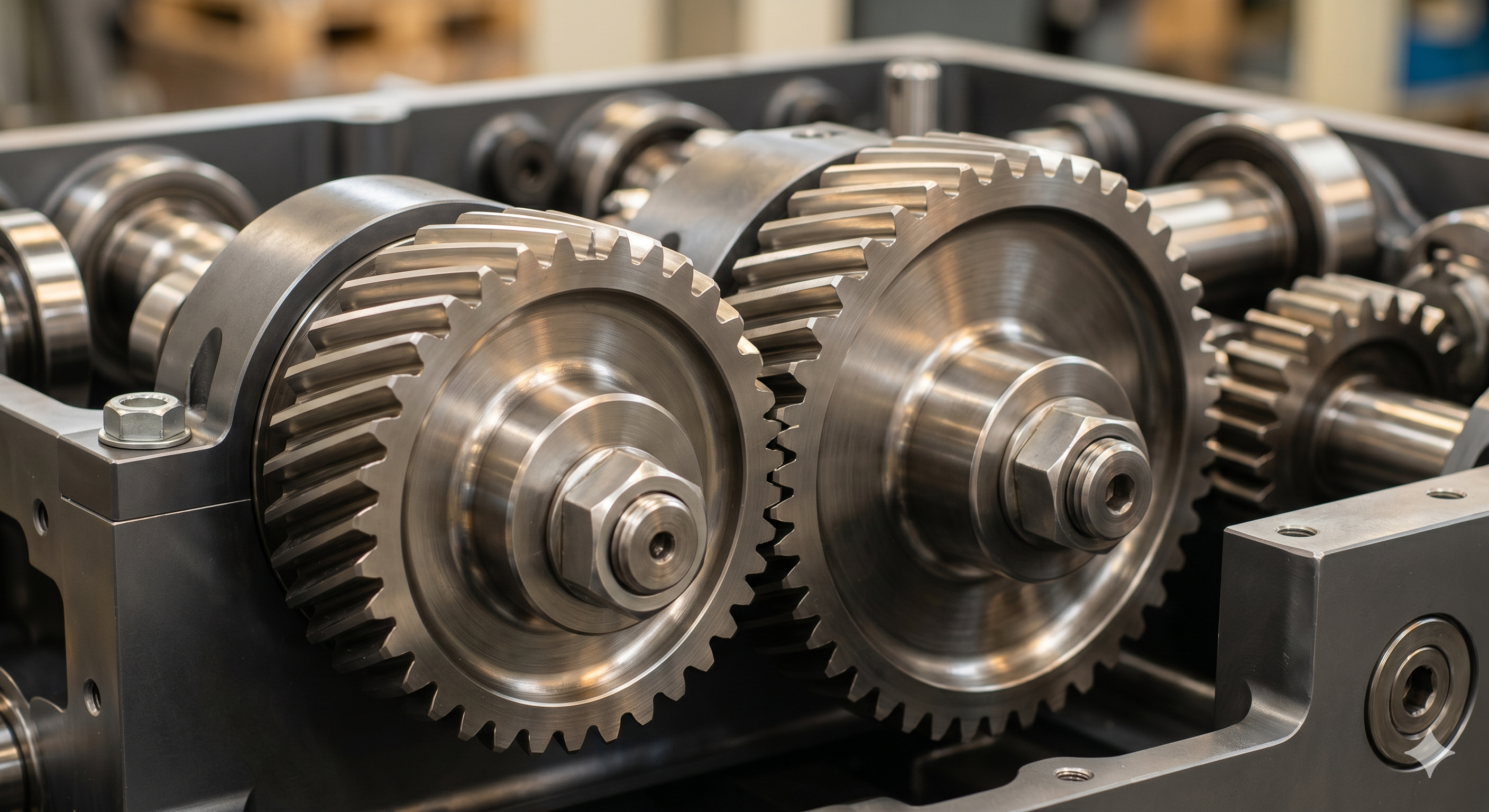
Idempotency means: run this ten times, get the same result as running it once. It's a concept from engineering, from the factory floor, actually, where you design machines to be safe to restart, safe to rerun, safe to recover from interruption without making things worse. Most no-code automations are not idempotent. They assume they'll run once, perfectly. The moment they run twice, due to a webhook retry, a trigger misfire, or a manual rerun, they create duplicates, double-charge, double-send. Building idempotent logic is extra work at the start. It's the difference between a workflow and an architecture.
The honest caveat
I'll be clear: not every system can be fully autonomous. If your business depends on data quality, and most do, then some level of human review will always be necessary. But there's a difference between a system that asks you to make decisions and a system that asks you to fix it. The first is healthy. The second is a sign the logic wasn't finished. My goal with every build is simple: the system handles everything it can handle, escalates only what genuinely needs a human, and never surprises anyone with silence when something goes wrong.
What it actually takes
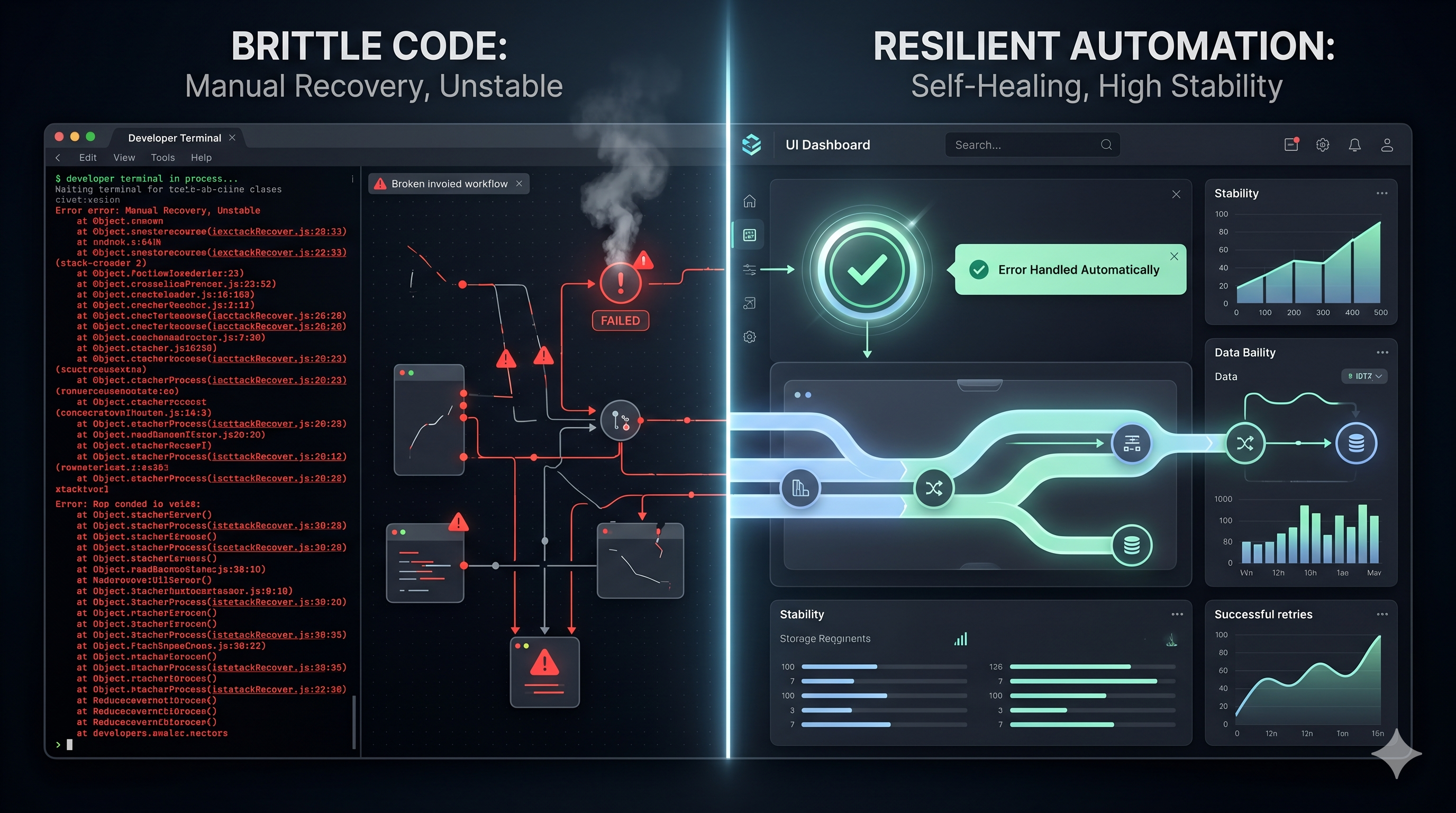
Error handling that's not an afterthought. Logging that tells you what happened without you having to dig. Retry logic for transient failures. Guards against duplicate runs. Clear escalation paths for the edge cases you can't automate. And most importantly, a mindset that treats the failure scenario as seriously as the success scenario. That's what set it and forget it actually takes. It's not a shortcut. It's a higher standard of build.