Shiny vs. Resilient: The Standard You Should Demand from Automation

2026-03-04 • Systems Architecture • Automation • Infrastructure • Enterprise • Engineering

Shiny vs. Resilient: The Standard You Should Demand from Automation

In the world of automation, it is easy to get distracted by things that look cool. Fast movements, flashy interfaces, and immediate visual satisfaction make for great demos.

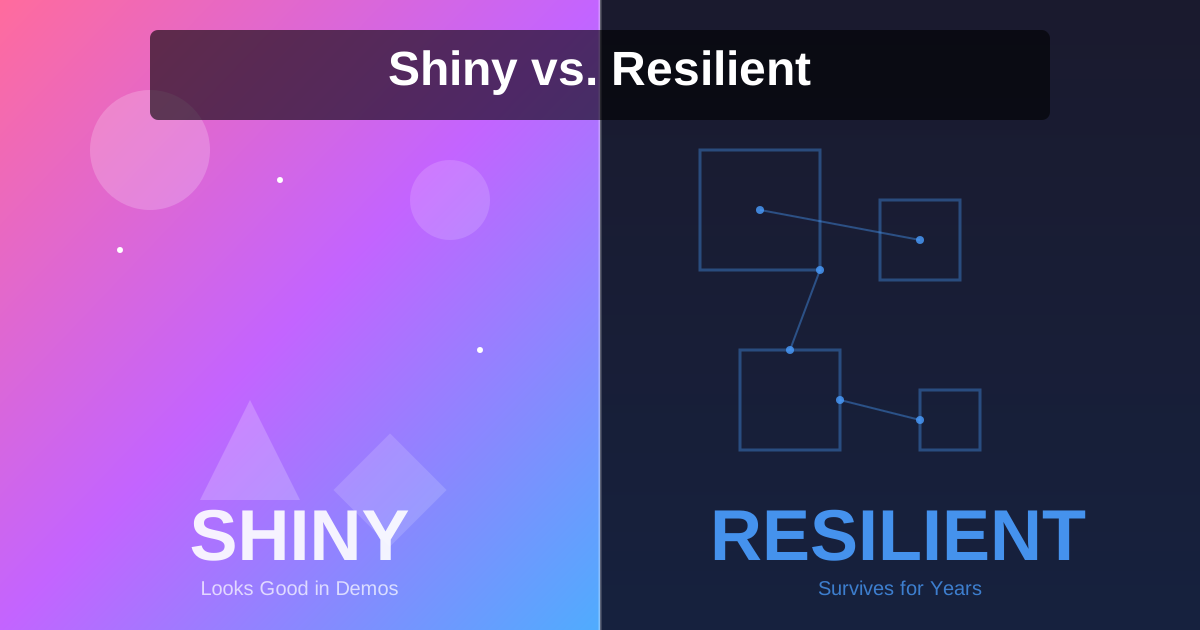
Demos are designed to win attention in 30 seconds. But production-ready systems are designed to survive for years without anyone touching them.

There is a massive gap between a system that looks good on a screen and a system that is enterprise-ready.
Two Kinds of Automation

There are two kinds of automation in the world.

The first kind impresses you. It does something visible and fast. You can show it in a video, and it looks great. People love to watch it because they can see it working.

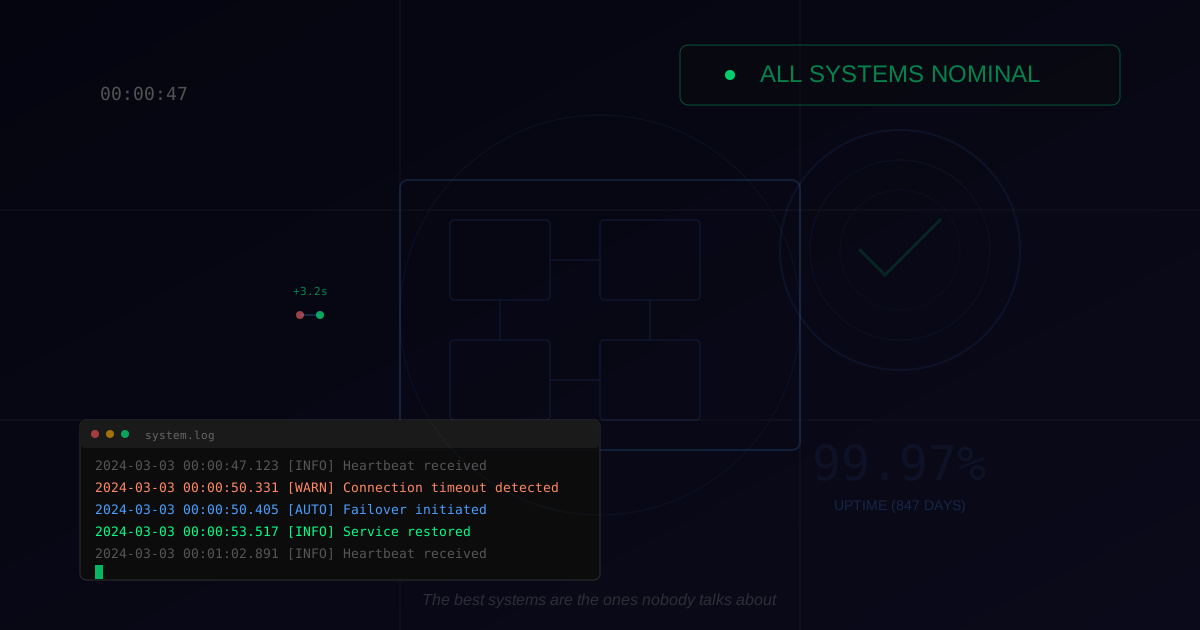
The second kind is invisible. You never notice it. It runs at 3 AM while you are asleep. It detects a failure, writes its own fix, executes the recovery, and sends you a report by morning. Everything is fine before you even wake up.

The second kind is what actually scales a business.

The Cost of the Lag

The Cost of the Lag

Automation is not just about making things faster. It is about reliability. Most people do not realize their system has failed until it is too late.

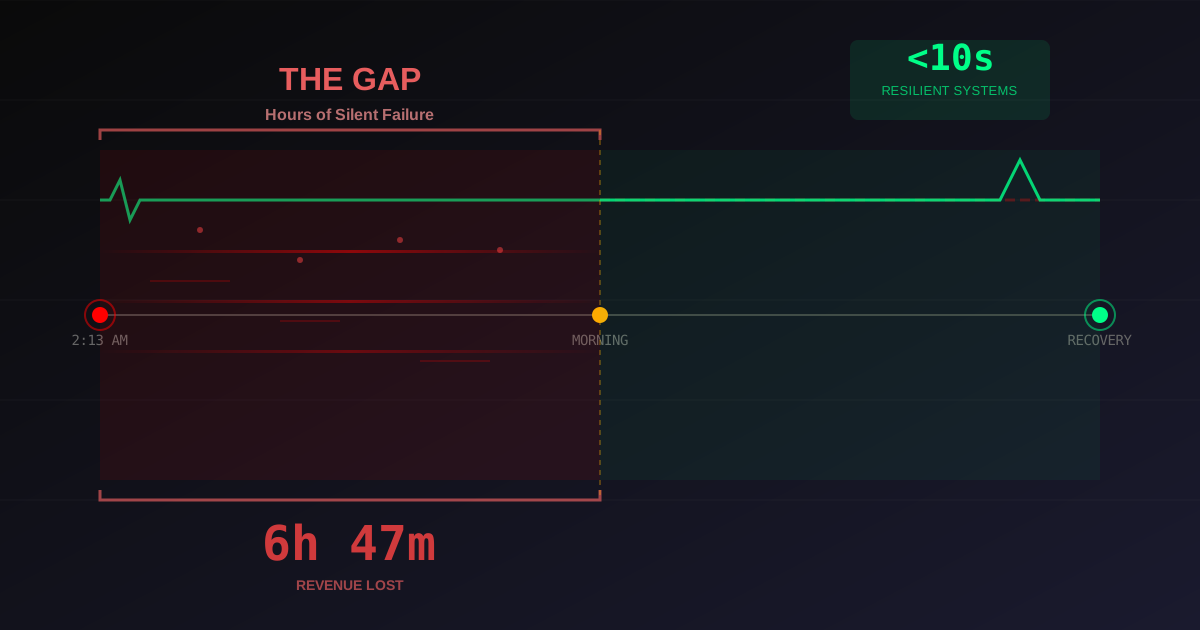
Imagine your Stripe webhook silently fails at 2:13 AM. Orders stop syncing to your CRM. By morning, your sales team is working with incomplete data. That is not a demo problem. That is a revenue problem.

In the systems I design, failure detection happens in seconds, not minutes. The goal is to eliminate the lag between failure and recovery. A truly resilient system identifies the issue, pulls the right recovery procedure, and executes the fix before a human even realizes something went wrong.

Engineering for the Invisible

Engineering for the Invisible

With mechatronics and automation, I have learned that the best systems are the ones nobody talks about. Not because they are boring, but because they never give you a reason to worry.

A failure at midnight is a crisis. In digital automation, it should just be a log entry that says 'Problem Detected, Problem Solved.

That is the highest standard in engineering: building something so reliable that it becomes invisible.

Impressive automation makes a great demo. Invisible, enterprise-ready automation makes a great business.

Control Without the Chaos

Control Without the Chaos

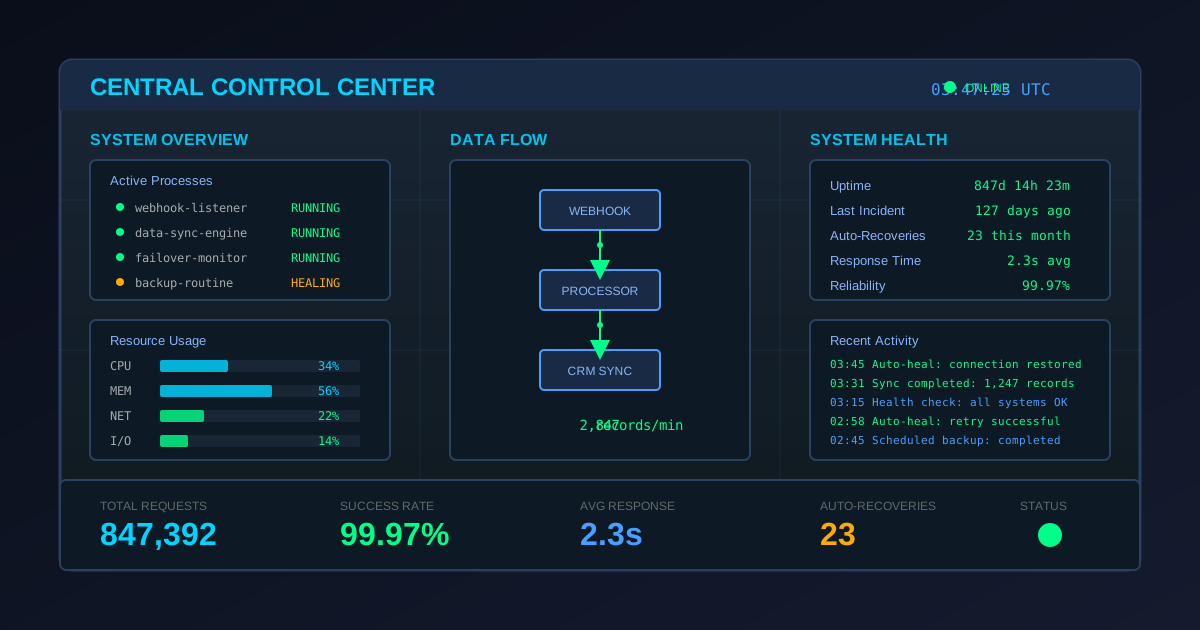
Resilience does not mean working in the dark. In the systems I design, I implement SCADA-style monitoring, a high-level dashboard that gives you full visibility of your entire automation stack.

It is the same philosophy I used in industrial plants. You have a central control center that shows you exactly what is running, what is healing, and where the data is flowing in real-time.

The automation stays invisible so you do not have to worry about it, but the dashboard stays visible so you are always in control. You get the peace of mind of a silent system with the oversight of a master engineer.

The Bottom Line

If your workflows are the backbone of your business, you cannot afford to wait for a human to fix them when they break. You need a system that can heal itself.

Resilience is not a feature you add later. It is the foundation. It is the difference between a tool that works when you watch it and a system that works when you are not there.

If you rely on automation to run your business, resilience is not optional. It is architecture.

← Back to Blog

System Diagnostics Request

⚡ Phase 01: Official Audit Intake $950 USD Proceed to Allocation ($950) >>

Operator Identity

Target Entity

Technical Context

Full Infrastructure Review
Security & Logic Map
Feasibility Report
Orchestrated via n8n