From Ladder Logic to Python: My Automation Journey Beyond Zapier

2026-07-31• Automation • Python • Mechatronics • PLC • AI • Zapier • Workflow

From Ladder Logic to Python: My Automation Journey Beyond Zapier

The Lure of Visual Automation

If you have spent any time building digital workflows, you know the magic of visual automation platforms. These tools simplify complex tasks, making them accessible. Dragging nodes, connecting triggers to actions, and seeing data move through Make, n8n, or Zapier feels effortless. The interface is intuitive, offering immediate feedback. You visualize, click, and routine tasks just disappear. This instant gratification is powerful.

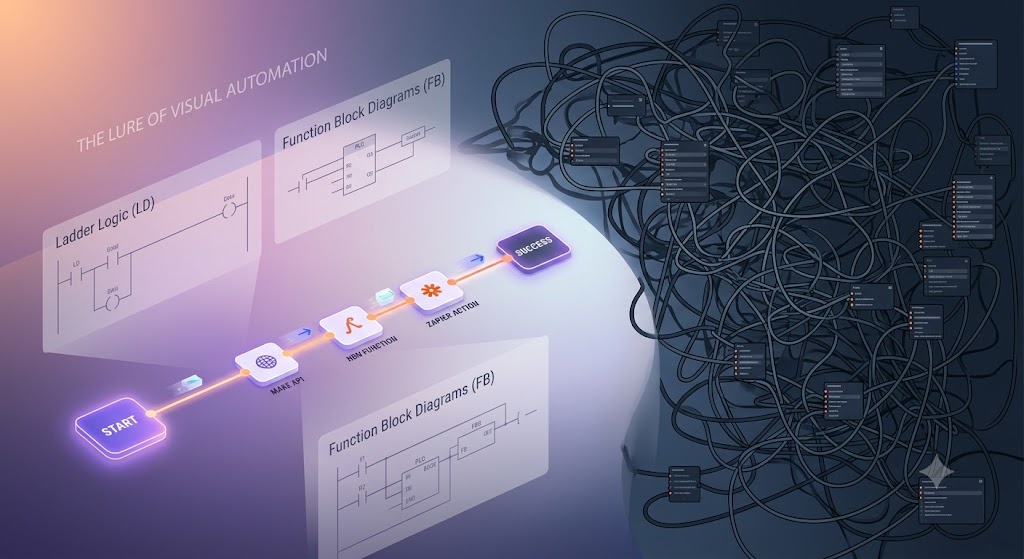
Coming from a mechatronics background, this visual approach was instantly familiar. Visual flow builders are the modern web equivalent of Ladder Logic (LD) and Function Block Diagrams (FB) used in industrial PLCs. These diagrams abstract away machine code. They give you a clean, bird’s-eye view of your system. You can trace the path, spot the connections, and deploy a working process in minutes. Visual builders are fantastic for prototyping. But as your systems grow, you inevitably hit a wall. The initial magic fades.
When Visual Builders Become Spaghetti Code

When Visual Builders Become Spaghetti Code

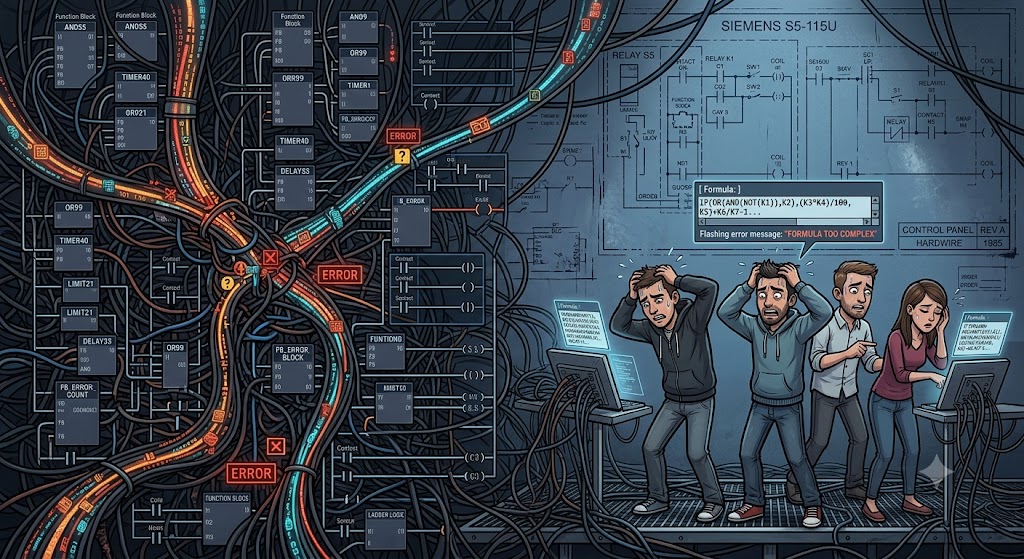
In factory automation, when Ladder Logic gets too complex, it turns into an unreadable web of rungs. Hundreds of intertwined lines, jumps, obscure tags. A nightmare to debug. The same thing happens in web automation. Your clean flowchart devolves into a sprawling network, losing its 'bird's-eye view'. When you need deep conditional logic, heavy data transformation, or nested error handling, drag-and-drop interfaces start working against you. Simple blocks cannot handle intricate decision trees.

Tying together twenty nodes, hiding complex formulas inside tiny input fields, and paying steep monthly tiers for every single execution step quickly becomes inefficient. Clarity disappears. Performance suffers, costs escalate. In PLCs, when Ladder Logic reaches its limits, engineers drop down to Statement List (STL) or Structured Text (ST). These are text-based, high-level languages. In the digital world, that equivalent is pure code. Specifically, Python. It empowers control visual tools cannot match.

Why Pure Python Takes Control Back

Why Pure Python Takes Control Back

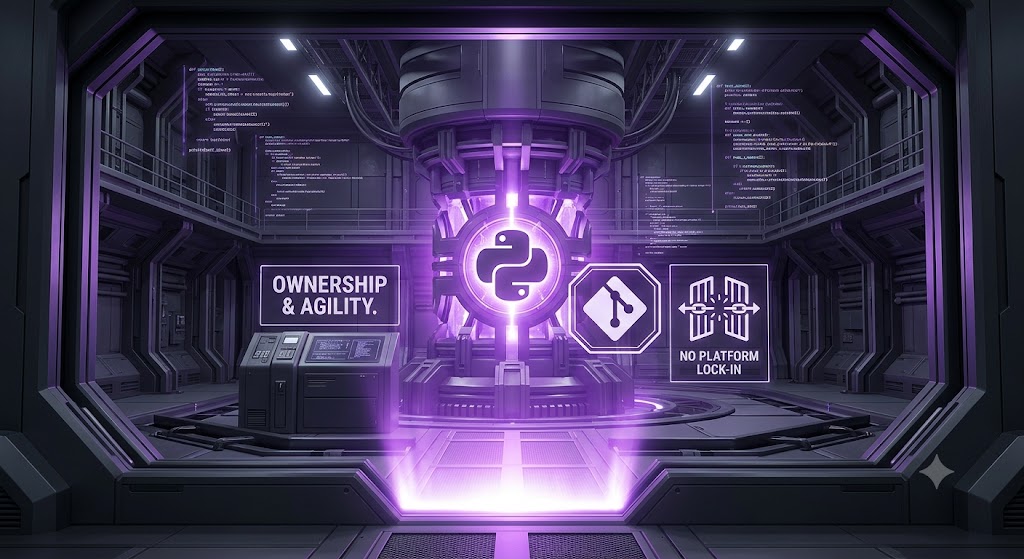
Switching from visual builders to text-based Python scripts gives you complete ownership over your infrastructure. Reclaim agency. Unconstrained Logic: You are no longer bound by what a pre-built module allows. If an API exists, you can interface with it exactly how you want. No black boxes. Precision Error Handling: You control exception handling line by line. For mission-critical systems, this is non-negotiable. You decide how retries, fallback routes, and logging operate when an endpoint fails. This ensures resilience.

Zero Platform Lock-in & Lower Costs: Running a Python script on your own server or as a small background service costs a fraction of high-volume visual automation plans. Own your code, deploy where you choose. True Version Control: Python scripts live in Git. This is fundamental for serious development. You can track changes, test branches, and rollback code seamlessly. Essential for maintainability and team collaboration.

The AI Trap: Why You Still Need the Fundamentals

The AI Trap: Why You Still Need the Fundamentals

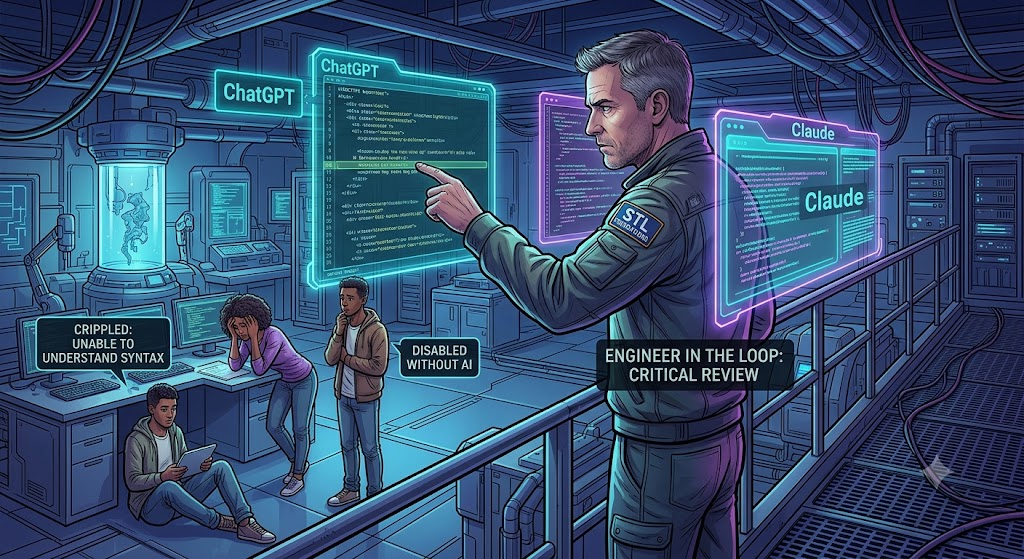
Today, writing Python is faster than ever because tools like ChatGPT and Claude can generate execution scripts in seconds. These AI assistants are incredible, accelerating development. I let AI write a large portion of my Python code. It's a co-pilot. However, there is a dangerous trap here. Delegating code generation to AI without understanding core programming logic will leave you crippled. You become a button-pusher. Relying on AI without knowing syntax or execution logic creates a dangerous dependency. When an API payload changes, an environment variable misses, or a silent bug hits at 2 AM, prompt engineering alone will not save you.

Because of my experience with low-level logic like STL, I understand execution sequence, variable scope, memory, and data flow. These are universal principles. That foundation allows me to spot where the AI made a mistake, fix bad logic, and safely stitch components together. I can review AI-generated code critically. AI is a massive speed multiplier, but only if you know how to direct it and read what it produces. You must be the engineer in the loop.

Knowing Which Tool to Use

Knowing Which Tool to Use

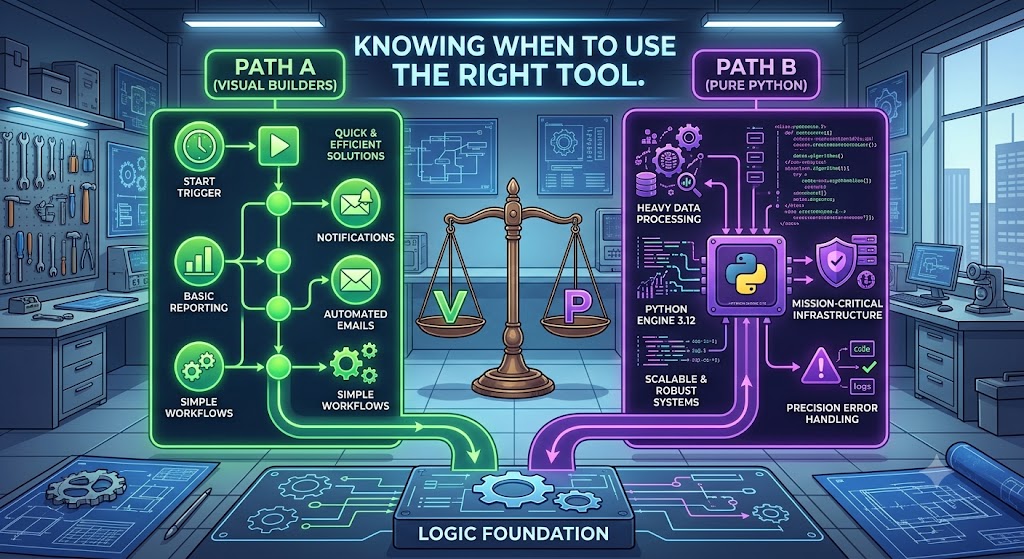
This is not to say visual automation tools are obsolete. n8n and Make are still brilliant for fast integrations and high-level routing. They excel where speed and clarity for non-technical users are paramount. The key is knowing when to use each approach. Use Visual Builders (FB/LD) when you need quick triggers, basic notifications, simple multi-app connections, or clear status visibility for non-technical team members. Think simple data transfers or basic reporting.

Use Pure Python (STL/ST) when you need heavy data processing, custom algorithmic logic, low-latency execution, or complete control over costs and reliability. This is for critical infrastructure. Building great automation is not about picking one side. It is about understanding the underlying logic deeply enough to use the right tool for the job. That foundational understanding is your true power.

← Back to Blog

System Diagnostics Request

⚡ Phase 01: Official Audit Intake $950 USD

Operator Identity

Target Entity

Technical Context

Full Infrastructure Review
Security & Logic Map
Feasibility Report
Orchestrated via n8n