The AI Gold Rush: Why Your Business Doesn't Need What You Think It Needs

2026-01-15 • RAG • Automation • Business Logic • Engineering

The AI Gold Rush: Why Your Business Doesn't Need What You Think It Needs

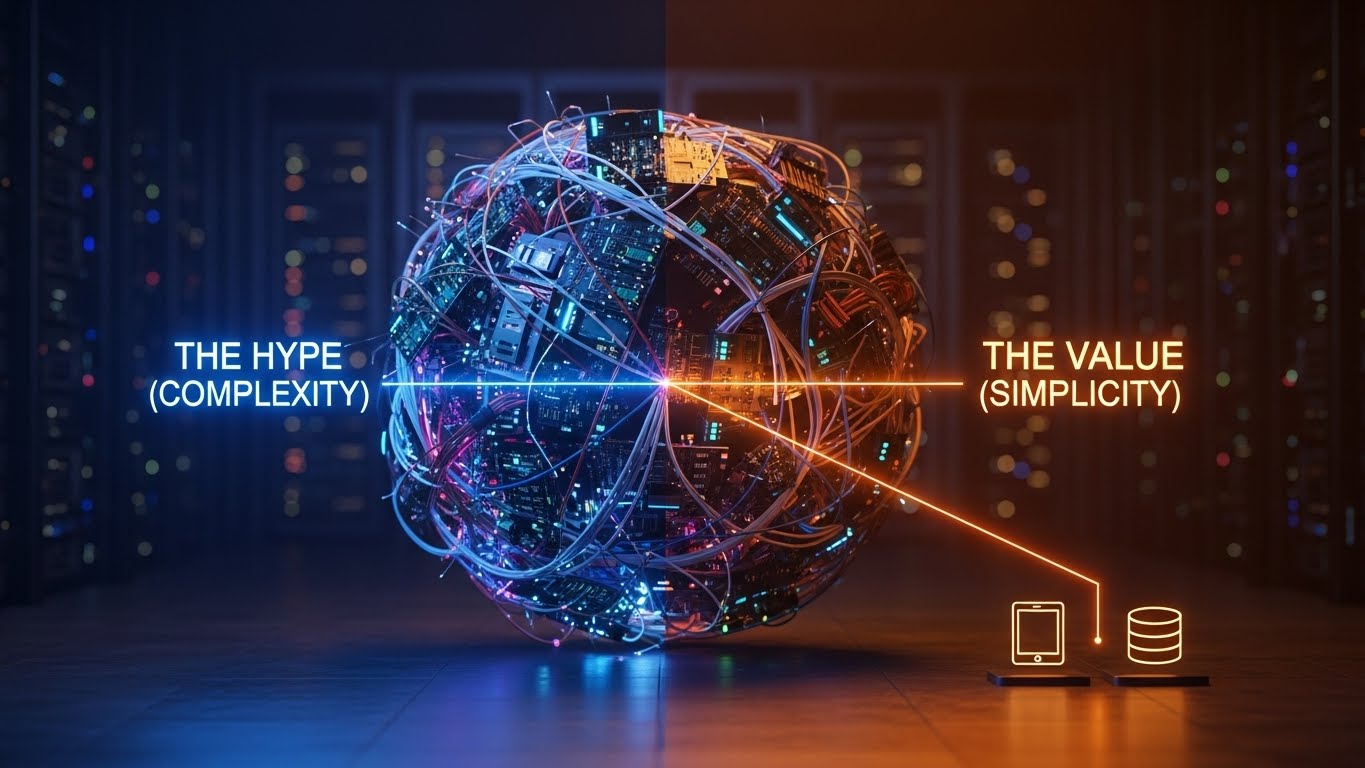
We're living at the peak of the AI hype cycle. Every business owner knows they need "AI," but very few know why or how. They consume TechCrunch articles, scroll through LinkedIn thought leaders, collect acronyms like trading cards, and then rush to developers with solutions instead of problems.

As an automation and AI engineer, my job is often less about building what the client asks for, and more about discovering what they actually need.

A recent client interaction perfectly illustrated this disconnect—and taught both of us an expensive lesson about the difference between technology theater and business value.

The Request That Raised Red Flags

The Request That Raised Red Flags

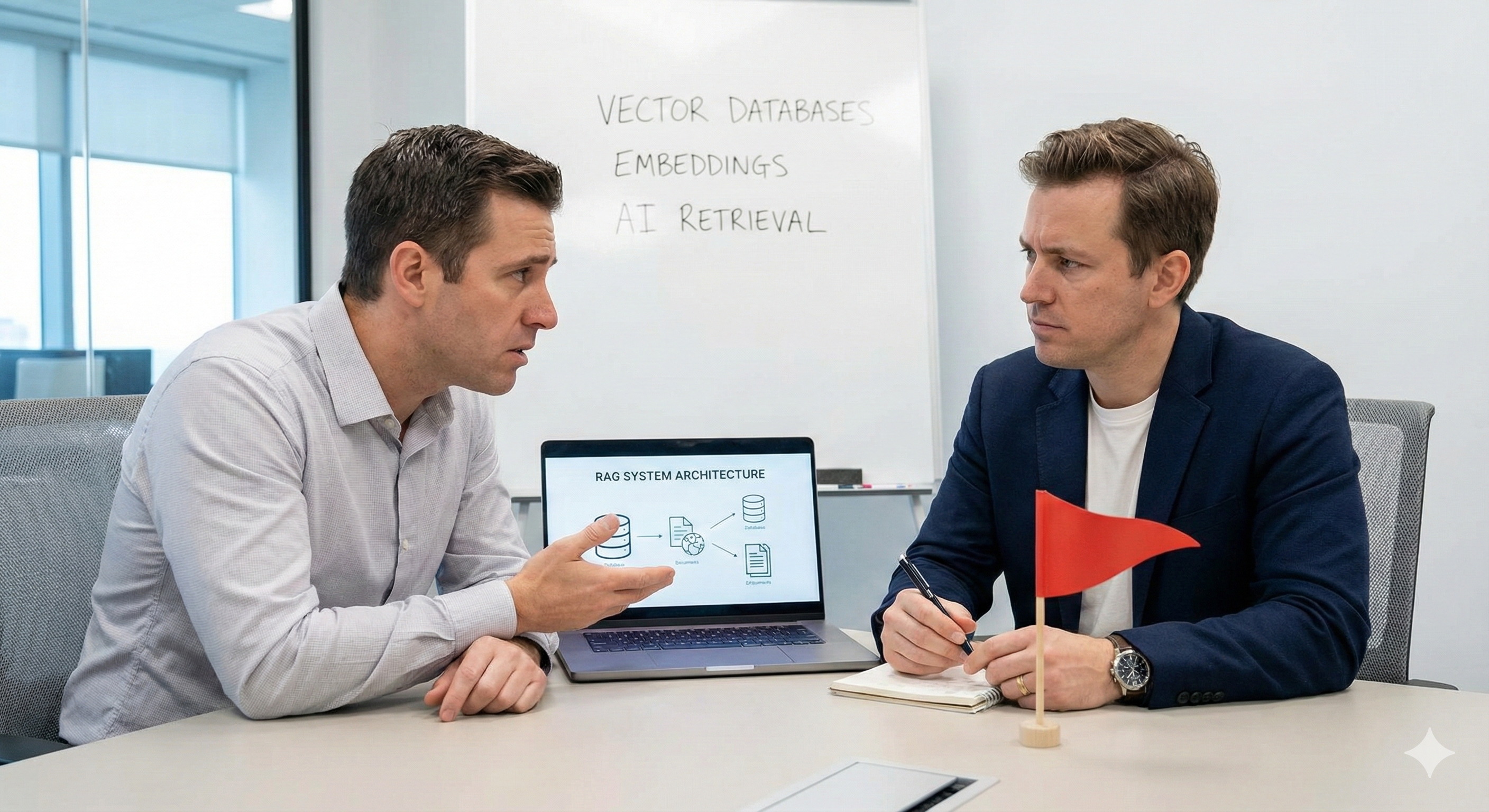
A prospective client approached me with urgency in their voice. They needed an AI chatbot, and they'd already decided on the architecture: "We need a RAG system."

For the uninitiated, RAG stands for Retrieval-Augmented Generation: it is complex AI infrastructure that embeds documents into vector databases so models can retrieve relevant info for precise, open-ended answers.

It's powerful. It's complex. It's expensive to build and maintain correctly.

"Interesting," I said, slipping into consultant mode. "A RAG system is serious tech. Walk me through your use case. What massive knowledge base does this bot need to query?"

The Reality Nobody Wants to Admit

The Reality Nobody Wants to Admit

The client paused. "Well, there's no database really. We just need the bot to ask new users three specific questions for onboarding."

I waited for the rest. There wasn't any.

"What are the three questions?" I asked carefully.

"We need it to ask about their Brand Promise, their Core Offer, and their Founder Story. In that order. Then save the responses."

I blinked twice.

They didn't want an AI librarian that could magically retrieve answers from a haystack of unstructured data. They wanted a clipboard with personality.

They didn't need RAG. They needed a Wizard.

RAG vs. Wizard: A Tale of Two Technologies

RAG vs. Wizard: A Tale of Two Technologies

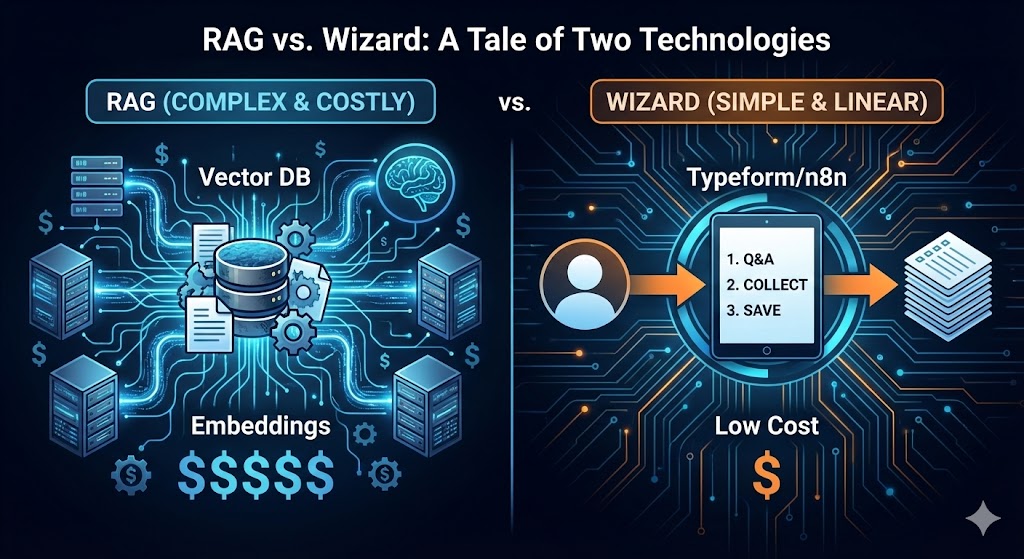
This is where the hype train derails projects and burns budgets. The client had confused a complex retrieval system with a simple data collection script. Here's the difference, explained without the jargon:

The Wizard (What They Actually Needed)

Think TurboTax or a structured intake form. It's linear. It's predictable. The bot controls the conversation flow.

Example interaction:

• Bot: "What's your brand promise?"

• User: "We help small businesses automate without complexity."

• Bot: "Perfect. Now, what's your core offer?"

Tech requirements: Minimal. You could build this in Typeform, ManyChat, or a basic n8n workflow in an afternoon. No AI models required beyond basic natural language understanding.

Cost: Hundreds of dollars. Maybe a thousand if you want it pretty.

The RAG (What They Asked For)

Think reference librarian standing next to a file cabinet containing your company's entire knowledge base. The user drives the conversation with unpredictable queries.

Example interaction:

• User: "What's your refund policy for Tier 2 products purchased on Tuesdays during promotional periods?"

• Bot: (Searches vector database, finds specific paragraph in 50-page PDF, cross-references three policy documents, synthesizes answer) "According to section 4.B of our refund policy, purchases made during..."

Tech requirements: Vector databases (Pinecone, Supabase pgvector), embedding models, semantic search infrastructure, complex orchestration layers, ongoing maintenance.

Cost: Thousands to tens of thousands of dollars, plus monthly hosting and API costs.
The Intervention That Saved Thousands

An order-taking developer would've billed $15K and spent 3 weeks over-engineering a 3-question survey with Pinecone and OpenAI.

Instead, I grabbed my digital napkin.

I sketched a simple workflow: Question A triggers → User responds → Response saves to database → Question B triggers. Repeat three times. Done.

We didn't build a RAG system. We built an elegant, purpose-fit workflow that accomplished their actual business objective—collecting three specific data points from new users—in a fraction of the time for a fraction of the cost.

Final implementation: A 45-minute n8n workflow connected to a Supabase table. Total cost: under $500. Total time: one afternoon.

The Pattern I See Everywhere

The Pattern I See Everywhere

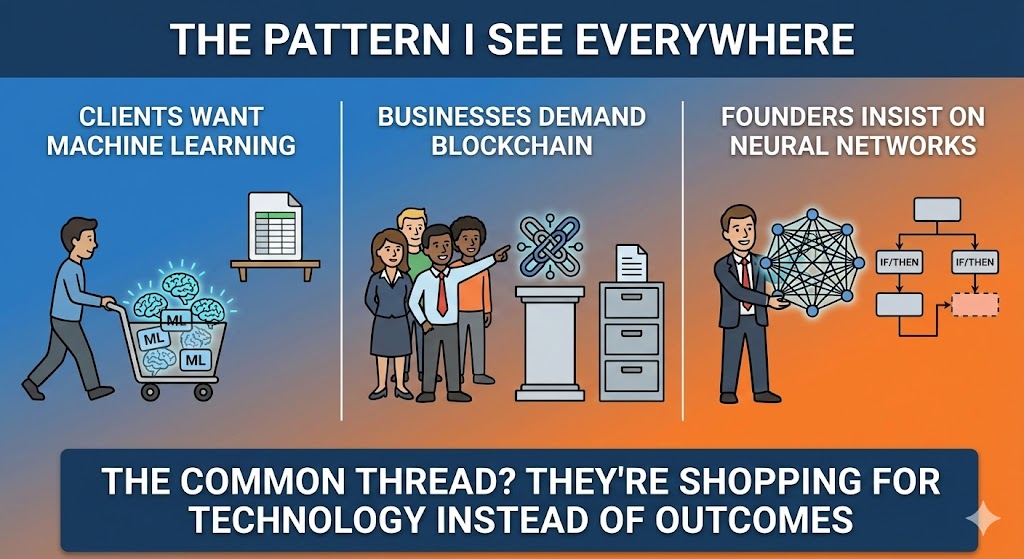
This isn't an isolated incident. I see this pattern weekly:

• Clients who want "machine learning" when they need a spreadsheet formula

• Businesses demanding "blockchain integration" when they need a basic database

• Founders insisting on "neural networks" when they need conditional logic

The common thread? They're shopping for technology instead of outcomes.

What Business Owners Should Do Instead

Stop leading with acronyms you heard on a podcast. Start with these three questions:

1. What business problem am I trying to solve? (Not "What technology sounds impressive?")

2. What does success look like in measurable terms? (Not "We'll have AI!")

3. What's the simplest solution that could work? (Not "What's the most complex thing we can build?")

When you approach an engineer or consultant, describe your desired outcome: "I need to collect three specific pieces of information from every new user in a conversational way that feels personalized."

Let the engineer worry about whether that requires RAG, a wizard, a form, or a carrier pigeon.

Because nine times out of ten, the simplest solution is the best one—and it usually doesn't require a vector database.

The Real Gold in This Gold Rush

The real gold rush isn't about who adopts the flashiest AI first. It's about who uses the right technology to solve the actual problem without setting cash on fire.

← Back to Blog

System Diagnostics Request

⚡ Phase 01: Official Audit Intake $950 USD Proceed to Allocation ($950) >>

Operator Identity

Target Entity

Technical Context

Full Infrastructure Review
Security & Logic Map
Feasibility Report
Orchestrated via n8n